
 EN
EN




Warehouse efficiency is one of the most closely watched metrics in modern supply chain management, and packaging choices play a far bigger role in achieving it than many operations managers initially realize. When products arrive in poorly designed flexible packaging that cannot stand upright, collapses under stacking pressure, or wastes cubic footage on shelves and pallets, the cumulative cost in labor, space, and damaged goods becomes significant. flat bottom packaging bags have emerged as a structural packaging solution that directly addresses these operational pain points by combining the flexibility of a flexible pouch with the stable, self-standing geometry of a rigid box.
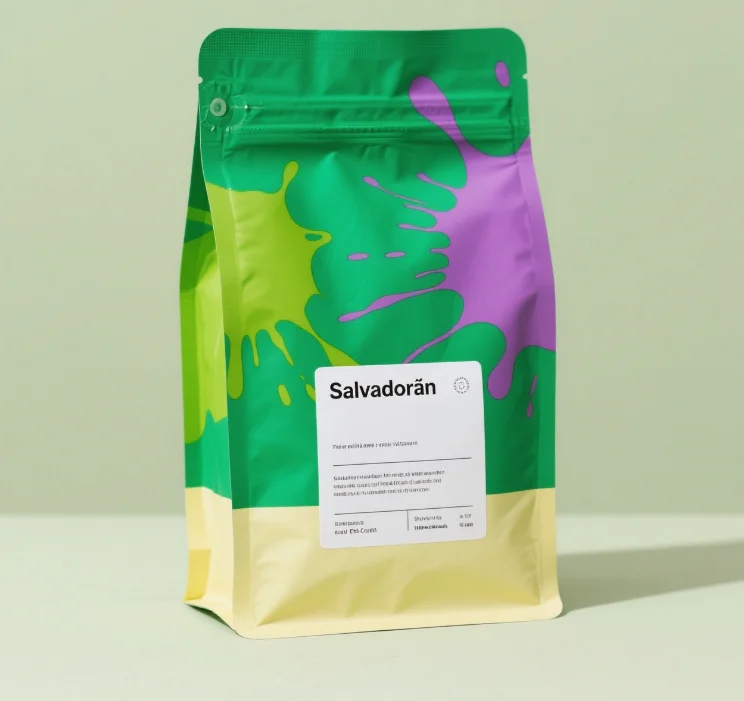
The question is not simply whether flat bottom packaging bags look better on a shelf. The real question for procurement managers, warehouse supervisors, and supply chain directors is whether their structural design translates into measurable operational improvements inside a warehouse environment. From receiving docks to picking aisles, from storage racks to shipping stations, flat bottom packaging bags interact with nearly every stage of the warehouse workflow. Understanding exactly how this design characteristic improves or complicates each of those stages is essential before committing to a packaging specification change.
The Structural Logic Behind Flat Bottom Packaging Bags
How the Gusseted Base Creates a Functional Footprint
Flat bottom packaging bags are engineered with a wide, gusseted base panel that expands outward when the bag is filled, creating a broad, stable rectangular footprint. Unlike round-bottom pouches or pillow-style bags that require external support to remain upright, the flat base allows the bag to stand independently on any flat surface. This self-standing property is the core structural advantage that drives nearly every downstream warehouse benefit.
The geometry of the flat base is not accidental. It is the result of a bottom gusset that folds outward under the weight of the product, distributing the load evenly across the full base width. This means that flat bottom packaging bags maintain their upright position even when partially filled, which matters during both storage and display cycles. The result is a bag that behaves more like a rigid carton in terms of spatial predictability while retaining all the cost and weight advantages of flexible packaging.
For warehouse planners, spatial predictability is an underappreciated value driver. When every unit in a product line occupies a consistent, rectangular footprint, slotting algorithms can be optimized more effectively. Pick paths can be designed with tighter tolerances. Inventory counting becomes easier because bags stand in visible, accessible rows rather than collapsing into irregular piles that obscure quantity and condition.
Material and Construction Properties That Support Warehouse Handling
Beyond the base geometry, flat bottom packaging bags are typically constructed from multilayer laminate films that provide significant rigidity along the side panels. This structural firmness means the bags resist deformation during mechanical handling, conveyor transport, and robotic picking operations. Softer pillow-style bags, by contrast, can deform around gripper mechanisms and create jam events in automated systems.
The panel stiffness of flat bottom packaging bags also means that printed labels, barcodes, and QR codes remain flat and scannable throughout the handling cycle. In high-throughput warehouse environments where scanning accuracy directly affects throughput speed, this detail is operationally significant. A bag that wrinkles or collapses around its barcode zone introduces scan failures that slow receiving, picking, and shipping processes.
Space Utilization and Storage Density in the Warehouse
Vertical Stacking Capability and Rack Optimization
One of the most direct ways flat bottom packaging bags improve warehouse efficiency is through their stacking performance. Because the flat base creates a level platform at both the bottom and, when sealed, at the top of the filled bag, these bags can be stacked vertically with far greater stability than round or pillow bags. Stable stacking is a prerequisite for maximizing the vertical cube utilization of warehouse racks, which is one of the primary levers available to warehouse managers operating in constrained space environments.
When flat bottom packaging bags are stacked in columns on pallet layers, the consistent rectangular geometry ensures that each layer supports the next without lateral shift. This reduces the frequency of topple events that damage product and require labor-intensive re-stacking. It also allows warehouse operations to use taller stack heights per pallet, which directly increases the number of units that can be stored per square meter of floor space.
For businesses managing high-SKU portfolios in ambient storage environments — coffee, pet food, dry ingredients, or specialty chemicals — the ability to achieve consistent stack heights across all units significantly simplifies inventory management and slotting efficiency. Flat bottom packaging bags bring a degree of dimensional consistency that is normally associated with rigid cartons, without the added cost and weight of carton packaging.
Shelf Slotting and Pick Face Density
In pick-to-label or pick-to-order fulfillment models, the density and accessibility of the pick face directly influences picker productivity. Flat bottom packaging bags occupy shelf space in a highly efficient rectangular profile. Because they stand upright without leaning devices, shelf dividers, or corrugated trays, more units can be positioned in a given shelf bay compared to flexible pouches that require lateral containment systems to prevent collapse.
The clean frontal presentation of flat bottom packaging bags also makes it easier for pickers to quickly identify the correct SKU by reading labels from a distance, reducing pick errors. In ambient temperature zones, where picker travel time dominates the labor cost, any reduction in the time needed to locate, identify, and retrieve a unit contributes directly to throughput metrics. The upright profile of flat bottom packaging bags shortens the visual search time per pick compared to collapsed or irregular-shaped pouches.
Impact on Receiving, Palletization, and Loading Operations
Faster Inbound Processing at the Receiving Dock
When inbound shipments arrive in flat bottom packaging bags, the receiving process benefits from the consistent dimensional regularity of each unit. Inbound cartons filled with flat bottom packaging bags are easier to palletize evenly because the bags conform to a rectangular envelope rather than settling into irregular shapes that create voids and unstable layers. This reduces the time required to prepare inbound shipments for putaway and decreases the incidence of product damage during the transfer from receiving dock to storage location.
Flat bottom packaging bags also lend themselves well to automated receiving processes where dimensional scanning systems are used to match physical package dimensions against purchase order records. The predictable geometry of flat bottom packaging bags enables higher first-pass match rates in these systems, reducing the exception handling that slows inbound throughput. In high-volume receiving environments, even a marginal improvement in first-pass match rates translates into meaningful labor savings over a full operating year.
Outbound Palletization and Load Planning
On the outbound side, the uniformity of flat bottom packaging bags supports more efficient palletization patterns. Because the bags maintain consistent height and width across all units in a lot, automated palletization systems can calculate optimal layer configurations without needing to account for dimensional variability. Manual palletizers also benefit, since the self-standing property of flat bottom packaging bags allows each layer to be placed and aligned quickly without requiring workers to manually prop or reposition units.
Load planning software that calculates trailer cube utilization also performs better when the input dimensions are consistent. Flat bottom packaging bags, when packed into shipping cases or stretch-wrapped directly on pallets, produce load configurations that are easier to model and optimize than irregular flexible packaging. This contributes to better trailer fill rates, which reduces per-unit shipping cost and decreases the number of shipments required to move a given volume of product.
Compatibility with Automation and Material Handling Equipment
Performance in Conveyor and Sortation Systems
Automated conveyor and sortation systems perform most reliably when the packages moving through them have consistent, predictable shapes. Flat bottom packaging bags are well suited to conveyor transport because their rigid base and firm side panels allow them to track reliably on belt conveyors without tumbling or jamming at transfer points. Pillow bags and soft pouches, by contrast, are prone to folding over edges and bridging gaps, which causes jams that require manual intervention and system downtime.
In facilities that use tilt-tray or cross-belt sorters, the standing geometry of flat bottom packaging bags provides a stable footprint that is less likely to tip during the sorting cycle. This is particularly important for higher-speed sortation systems where centrifugal forces at curve sections can destabilize round or irregular packages. The structural integrity of flat bottom packaging bags gives them a clear compatibility advantage in these environments.
Integration with Robotic Picking and Automated Storage Systems
Robotic picking systems — whether in goods-to-person fulfillment centers or automated mini-load systems — depend on consistent package geometry for reliable gripping and placement. Flat bottom packaging bags present a defined, flat surface on multiple faces, which gives robotic end-effectors a reliable contact area for vacuum or mechanical gripping. The predictable geometry also allows vision-guided robotic systems to locate the package more quickly, reducing cycle time per pick.
In automated storage and retrieval systems, flat bottom packaging bags can be stored and retrieved in tote or tray carriers that are dimensioned to their rectangular footprint. This compatibility allows operations to take full advantage of the density benefits of automated vertical storage while using a flexible packaging format that costs significantly less than rigid cartons or cans. For businesses planning automation investments, the compatibility of flat bottom packaging bags with existing and future automated systems is a meaningful factor in the total cost of ownership calculation.
Business Considerations for Transitioning to Flat Bottom Packaging Bags
Evaluating the Operational ROI of a Packaging Format Change
Transitioning to flat bottom packaging bags from an existing flexible packaging format requires a thorough operational assessment to quantify expected benefits against transition costs. The primary benefit drivers to measure include reductions in labor time for palletization, improvements in storage density, decreases in product damage rates, and improvements in scanner read accuracy. Each of these metrics has a calculable dollar value that can be compared against the incremental cost of flat bottom packaging bags relative to the incumbent format.
Operations that handle high volumes of SKUs in ambient storage environments typically see the strongest ROI from transitioning to flat bottom packaging bags, because the space utilization and handling efficiency benefits compound across a large product base. Businesses with lower volumes or simpler warehouse configurations may find that the efficiency gains are real but modest, and the transition decision should be weighed accordingly. A targeted pilot on one product line is a practical way to generate site-specific data before committing to a full-format transition.
Supplier Specifications and Quality Consistency
To capture the warehouse efficiency benefits of flat bottom packaging bags consistently, it is essential that supplier specifications enforce tight dimensional tolerances and consistent gusset formation. Variations in gusset depth or base panel width between production runs can undermine the stacking stability and footprint consistency that drive the operational benefits. Procurement teams should establish clear specification documents that include base width, overall height, film gauge, and gusset depth as controlled parameters.
Quality consistency across production lots also matters for operations using automated systems. If flat bottom packaging bags from different lots vary in their stiffness or base dimensions, robotic systems may require recalibration, and conveyor systems may experience new jam patterns. Establishing incoming inspection protocols for dimensional verification is a prudent step when first introducing flat bottom packaging bags into an automated fulfillment environment.
FAQ
Do flat bottom packaging bags actually improve warehouse space utilization compared to pillow pouches?
Yes, flat bottom packaging bags typically improve space utilization because their rectangular footprint and self-standing geometry allow tighter, more stable stacking on pallets and shelves. Pillow pouches settle into irregular shapes that create voids and require containment systems, both of which reduce storage density. The dimensional consistency of flat bottom packaging bags allows warehouse slotting to be optimized more precisely, which translates directly into higher units per square meter of floor space.
Are flat bottom packaging bags compatible with automated conveyor and robotic picking systems?
Flat bottom packaging bags are generally more compatible with automated handling equipment than softer flexible packaging formats. Their flat base and firm side panels allow reliable tracking on belt conveyors, stable performance on sortation equipment, and consistent gripping surfaces for robotic end-effectors. Operations planning to integrate automation should confirm that their specific equipment specifications align with the dimensional and material properties of the flat bottom packaging bags they plan to use.
What product categories benefit most from switching to flat bottom packaging bags in a warehouse environment?
Products stored in ambient temperature conditions — including coffee, dry food ingredients, pet food, snacks, and powder-based products — tend to benefit most from flat bottom packaging bags in warehouse environments. These categories typically involve high SKU counts, repetitive handling cycles, and significant storage volumes where the space and labor efficiency gains of flat bottom packaging bags accumulate meaningfully over time. Products with very low warehouse dwell times or very small lot sizes may see proportionally smaller gains.
How should procurement teams specify flat bottom packaging bags to ensure consistent warehouse performance?
Procurement teams should include dimensional tolerances for base width, bag height, gusset depth, and film gauge in their flat bottom packaging bags specifications. Consistency in these parameters across production lots is what ensures reliable stacking, scanning, and automated handling performance. Incoming dimensional inspection and periodic supplier audits are practical measures to maintain the quality consistency that the warehouse efficiency benefits of flat bottom packaging bags depend on.
Table of Contents
- The Structural Logic Behind Flat Bottom Packaging Bags
- Space Utilization and Storage Density in the Warehouse
- Impact on Receiving, Palletization, and Loading Operations
- Compatibility with Automation and Material Handling Equipment
- Business Considerations for Transitioning to Flat Bottom Packaging Bags
-
FAQ
- Do flat bottom packaging bags actually improve warehouse space utilization compared to pillow pouches?
- Are flat bottom packaging bags compatible with automated conveyor and robotic picking systems?
- What product categories benefit most from switching to flat bottom packaging bags in a warehouse environment?
- How should procurement teams specify flat bottom packaging bags to ensure consistent warehouse performance?