
 EN
EN



Across virtually every segment of modern retail, one packaging format has emerged as a consistent symbol of environmental responsibility and commercial practicality: the kraft paper bag. From boutique fashion stores and organic grocery markets to artisan bakeries and e-commerce fulfillment centers, retailers of all sizes are shifting toward this material as a deliberate, strategic choice. The rise is not coincidental — it reflects a convergence of consumer demand, regulatory pressure, and genuine material advantages that make the kraft paper bag uniquely suited to today's sustainability-driven marketplace.
Understanding why the kraft paper bag has achieved such widespread adoption requires looking beyond surface-level trends. It requires examining the material's inherent properties, its alignment with circular economy principles, and the practical realities faced by retail businesses navigating both environmental regulations and customer expectations. This article explores the key reasons why the kraft paper bag has become a foundational component of sustainable retail packaging strategy — and why that trend shows no sign of reversing.
The Environmental Case for Kraft Paper Bag Packaging
Biodegradability and Natural Decomposition
At the core of the sustainability argument is the fact that a kraft paper bag is made from natural wood pulp, which means it decomposes through natural biological processes far more readily than petroleum-based plastic alternatives. When disposed of in a landfill, a kraft paper bag breaks down within weeks to months, whereas conventional plastic bags can persist in the environment for hundreds of years. This stark contrast has made the kraft paper bag a preferred solution for retailers aiming to reduce their long-term environmental footprint.
Biodegradability is particularly important as municipalities and national governments implement stricter waste management standards. Retailers that use biodegradable packaging such as the kraft paper bag are better positioned to comply with evolving regulations without requiring disruptive changes to their operational model. The decomposition process also avoids the release of harmful microplastics, a growing environmental concern linked directly to synthetic packaging materials.
For consumers who are increasingly conscious about where their post-purchase waste ends up, the knowledge that a kraft paper bag will not persist in a landfill for centuries is a meaningful differentiator. It transforms what was once a purely functional item — the carry bag — into a visible statement of brand values aligned with environmental stewardship.
Recyclability and Circular Economy Integration
Beyond biodegradability, the kraft paper bag integrates seamlessly into existing paper recycling infrastructure, which is far more developed and accessible than plastic film recycling systems in most countries. Consumers can place a used kraft paper bag directly into standard paper recycling streams without requiring specialized drop-off points or processing facilities. This ease of recycling dramatically increases actual recycling rates compared to alternative packaging formats.
From a circular economy perspective, the kraft paper bag participates in a material loop in which paper fibers are harvested, processed, used, collected, and reprocessed into new paper products multiple times before the fiber degrades too far for reuse. Retailers who adopt kraft paper bag packaging are effectively contributing to a closed-loop supply chain that reduces virgin material consumption over time. This aligns directly with sustainability reporting frameworks increasingly required by investors, regulators, and major retail partners.
The recyclability of the kraft paper bag also gives brands a credible, verifiable sustainability claim — one that does not rely on complex chemical processes or consumer access to rare drop-off facilities. It is a practical, real-world environmental benefit that resonates with buyers and supply chain auditors alike.
Consumer Behavior and Brand Perception Drivers
Growing Consumer Preference for Sustainable Packaging
The surge in consumer awareness around environmental issues has fundamentally altered purchasing behavior in retail markets. Studies consistently show that a significant and growing portion of consumers actively factor packaging sustainability into brand preference decisions. The kraft paper bag has become one of the most immediately recognizable signals of sustainable retail practice, partly because of its natural brown color and texture that visually communicates an eco-conscious identity without the need for additional messaging.
When a shopper receives their purchase in a quality kraft paper bag, the tactile and visual experience reinforces positive brand associations. The feel of sturdy kraft paper, the weight capacity it offers, and the reusability of a well-made bag all contribute to a perception of quality that disposable plastic bags cannot replicate. For premium and lifestyle brands in particular, packaging is an extension of the product experience, and the kraft paper bag consistently performs well in this dimension.
Retailers operating in competitive markets also benefit from the word-of-mouth and social media visibility that thoughtfully designed kraft paper bag packaging can generate. A well-branded shopping bag carried in public becomes a form of organic marketing — one that simultaneously communicates the retailer's values and products to a broader audience.
The Role of Custom Printing and Brand Identity
One practical reason why the kraft paper bag has become so dominant in retail is its exceptional printability. The surface of kraft paper accepts a wide range of printing techniques — including flexographic, digital, and screen printing — allowing brands to produce vibrant, high-resolution logo prints, custom typography, and branded graphics with strong visual impact. This makes customization both accessible and cost-effective even at moderate production volumes.
For retail businesses that previously relied on plain plastic bags or unbranded generic packaging, switching to a custom-printed kraft paper bag represents a genuine upgrade in brand presentation. The ability to incorporate full-color designs, matte or gloss finishes, and structural features such as reinforced handles or gussets means that the kraft paper bag can be tailored to the specific functional and aesthetic requirements of virtually any retail category.
Brand identity investment in packaging also generates measurable commercial returns. Retailers who elevate their unboxing and carry-away experience through a premium kraft paper bag often report increased customer retention, higher perceived product value, and stronger alignment with the premium or sustainable market positioning they seek to maintain.
Regulatory Environment and Market Compliance Pressures
Plastic Bag Bans and Packaging Legislation
A significant driver behind the mass adoption of the kraft paper bag in sustainable retail markets is the steady global expansion of plastic bag bans and packaging reduction legislation. Dozens of countries, states, and municipalities have now implemented outright bans on single-use plastic shopping bags, while others have introduced plastic bag taxes or mandated the use of certified sustainable alternatives. In this regulatory landscape, the kraft paper bag has emerged as the most practical and immediate substitute.
Unlike some alternative materials that require specialized supply chains or carry high unit costs, the kraft paper bag benefits from a mature global manufacturing base, well-established raw material sourcing, and widespread distribution networks. This makes compliance transitions manageable for retailers of all sizes — from independent boutiques to large-format chain stores. The kraft paper bag allows businesses to respond to regulatory requirements without sacrificing packaging functionality or incurring prohibitive cost increases.
Looking forward, the regulatory trajectory in most major markets clearly favors continued reduction in single-use plastics and increased adoption of paper-based and compostable packaging alternatives. Retailers who have already integrated the kraft paper bag into their packaging infrastructure are better positioned to remain compliant as these regulations tighten, avoiding the risk of last-minute operational disruptions or financial penalties.
Corporate Sustainability Goals and ESG Reporting
Beyond government regulation, many retailers are now subject to internal and investor-driven sustainability mandates tied to Environmental, Social, and Governance (ESG) reporting frameworks. Packaging choices have become a measurable component of these frameworks, with specific attention paid to material recyclability, carbon footprint reduction, and progress toward plastic elimination targets. The kraft paper bag contributes positively to all of these metrics and is easy to document within standard sustainability reporting processes.
Major retail chains and their supplier networks have begun requiring packaging partners and private-label brand owners to demonstrate compliance with sustainability packaging standards. For businesses supplying into these channels, adopting the kraft paper bag is increasingly a prerequisite for maintaining commercial relationships rather than simply a voluntary choice. The packaging decision has moved from the marketing department into the procurement and compliance function.
Functional and Structural Advantages in Retail Contexts
Strength, Load Capacity, and Material Versatility
The kraft manufacturing process — in which wood pulp is chemically treated using the kraft process to preserve long cellulose fibers — produces paper with exceptional tensile strength relative to its weight. This means a well-constructed kraft paper bag is capable of carrying substantial loads without tearing, a critical functional requirement in retail applications where customers may be carrying multiple products of varying weight and size. The structural reliability of the kraft paper bag makes it appropriate for everything from apparel and cosmetics to food products and hardware items.
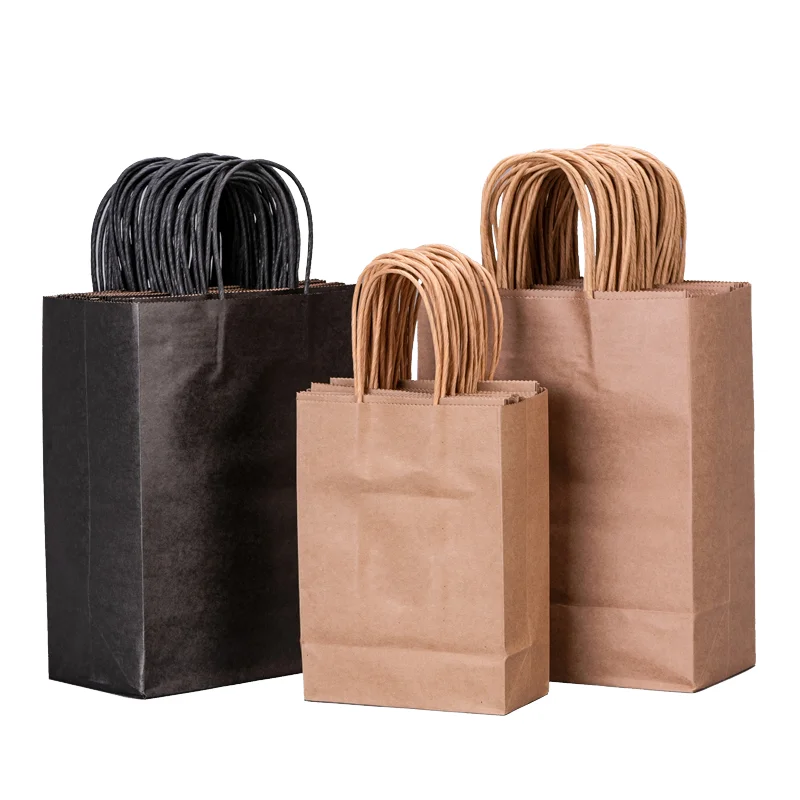
Retailers also benefit from the versatility of kraft paper as a base material. The kraft paper bag can be manufactured in a wide range of dimensions, with flat or twisted paper handles, reinforced base panels, and various gusset configurations to accommodate different product categories. Whether the end use is a small jewelry boutique bag or a large-format grocery carrying bag, the kraft paper bag format can be scaled and engineered to meet the specification without significant cost premiums.
The natural moisture resistance of kraft paper — which can be further enhanced through lamination or surface coating without compromising core recyclability — adds practical durability in retail environments where humidity or weather exposure may occur during customer transit. This functional resilience makes the kraft paper bag a reliable choice in a broad range of climatic and retail settings.
Cost Competitiveness Relative to Premium Sustainable Alternatives
While the kraft paper bag is generally priced higher per unit than the cheapest single-use plastic bags, it remains significantly more cost-competitive than many premium sustainable alternatives such as non-woven polypropylene bags, certified compostable bio-based films, or organic cotton tote bags. For retailers seeking to make a genuine sustainability transition without absorbing excessive cost increases, the kraft paper bag occupies an attractive position on the cost-versus-sustainability value curve.
At meaningful production volumes, the unit cost of a customized kraft paper bag is highly competitive, particularly when the brand value and customer experience benefits are factored into the total return on investment. Retailers who invest in quality kraft paper bag packaging often find that the perceived product value increase it generates among customers offsets a significant portion of the packaging cost differential.
Supply chain stability is also an important consideration. The kraft paper industry benefits from a broad global supplier base with established logistics networks, which provides retailers with greater sourcing flexibility and pricing negotiation leverage compared to some newer sustainable packaging technologies that remain in early-stage commercial scaling.
FAQ
Is a kraft paper bag suitable for heavy retail products?
Yes. A quality kraft paper bag manufactured with appropriate grammage and reinforced construction — including gusseted bases and sturdy handles — is capable of supporting substantial loads. Many kraft paper bag formats used in grocery and hardware retail are engineered specifically to handle products weighing several kilograms without structural failure. Retailers should specify their load requirements to their packaging supplier to ensure the correct construction grade is selected.
Can a kraft paper bag be customized with full-color brand printing?
Absolutely. The kraft paper bag is highly compatible with multiple commercial printing methods including flexographic, offset, digital, and screen printing. Full-color logo printing, brand imagery, and text are all achievable on kraft paper surfaces. The natural brown tone of unbleached kraft paper creates a distinctive aesthetic contrast that many brands intentionally leverage as part of their visual identity, while white kraft paper offers a more neutral base for vibrant color reproduction.
How does kraft paper bag packaging support ESG and sustainability reporting?
The kraft paper bag contributes to multiple ESG packaging metrics simultaneously. It is biodegradable, recyclable within mainstream paper collection streams, sourced from a renewable material base, and reduces reliance on fossil fuel-derived single-use plastics. These properties align with commonly used sustainability reporting frameworks and packaging reduction commitments. Documentation of kraft paper bag usage can be incorporated into packaging sustainability disclosures with clearly verifiable environmental credentials.
What retail sectors benefit most from switching to kraft paper bag packaging?
While the kraft paper bag is broadly applicable across retail categories, the sectors that tend to derive the greatest combined commercial and sustainability benefit include food and beverage retail, fashion and apparel, cosmetics and personal care, specialty gifts, and home goods. These are categories where packaging plays an active role in customer experience and brand perception, and where sustainability positioning has strong alignment with core customer values. However, even in categories with purely functional packaging requirements, the cost-competitiveness and regulatory compliance benefits of the kraft paper bag make it a sound strategic choice.